Omnichannel Journey Orchestration: A Practical Guide for 2025
Omnichannel Journey Orchestration: A Practical Guide for 2025

In today’s hyper-connected world, your customers don’t see separate channels; they just see one brand—yours. Their journey is fluid, moving naturally from a social media ad to your mobile app, or from a web chat to a physical store. To meet their expectations in 2025, marketers need to go beyond just being present on multiple channels and learn to orchestrate them. This is what omnichannel journey orchestration is all about: transforming fragmented interactions into a single, seamless conversation that delivers the unified and personalized experience customers now demand.
What is Omnichannel Orchestration (and How is it Different from Multichannel)?
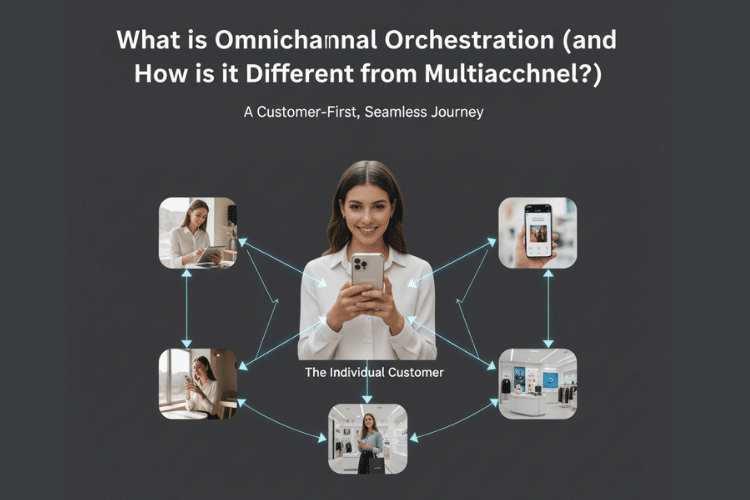
Omnichannel orchestration is a customer-first strategy that weaves all channels and touchpoints together to create one seamless experience. The core idea is that a customer’s journey is continuous, allowing them to start on one channel and finish on another without any friction or loss of context. This approach puts the individual customer—not the channel—at the heart of the strategy, using their behavior to guide the next step in a fluid, adaptive journey.
The Core Components: Unified Data, AI-Powered Decisions, and Consistent Touchpoints
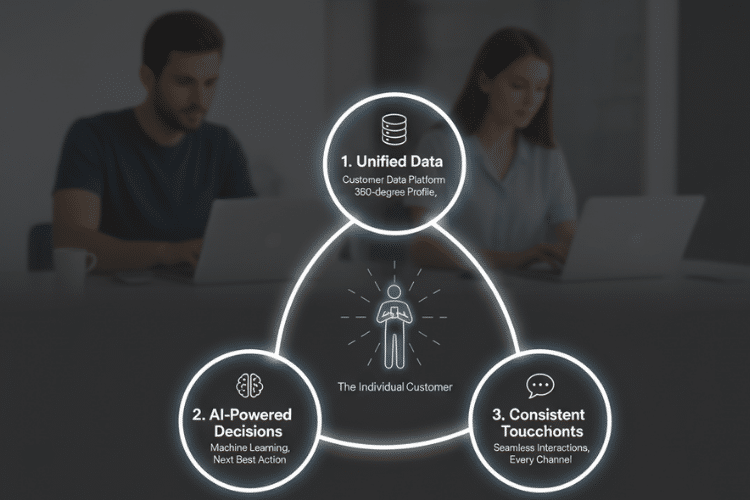
A successful omnichannel strategy is built on three key pillars. The first and most critical is Unified Data. This means bringing all your customer data from every touchpoint—website visits, in-store purchases, app usage, support calls—into a single, 360-degree customer profile, often powered by a Customer Data Platform (CDP). This unified view becomes the single source of truth that fuels everything else.
The second component is AI-Powered Decisions. With a solid data foundation, AI and machine learning can analyze customer behavior, predict their needs, and automate personalization in real time. This is the intelligence engine that turns data into action, figuring out the “next best step” for every customer. The final pillar is Consistent Touchpoints, ensuring every interaction feels like part of the same ongoing conversation, no matter the channel.
Building Your Omnichannel Strategy: A Step-by-Step Framework
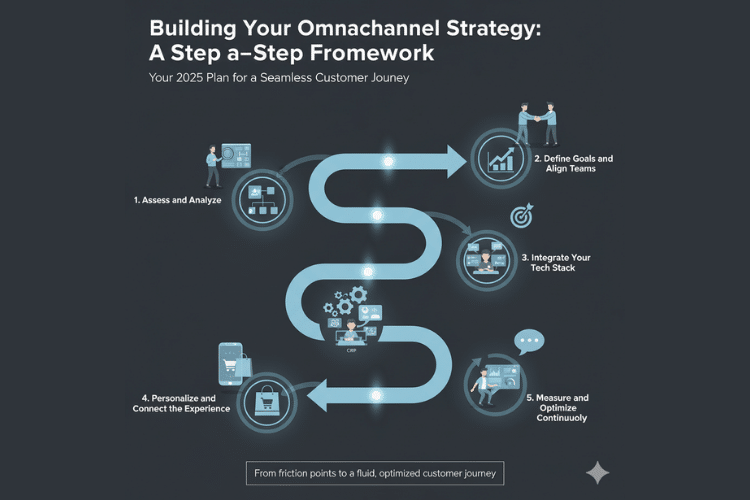
First, Assess and Analyze your current state by mapping out your customer journeys to find friction points and drop-offs. Next, Define Goals and Align Teams by getting everyone on board with clear, customer-centric goals like customer lifetime value (CLV) and retention, rather than siloed channel metrics.
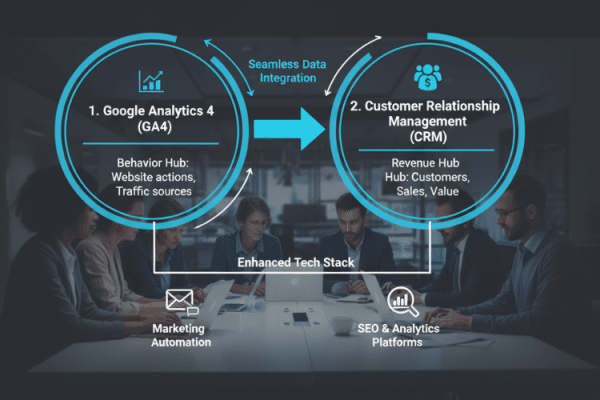
The third step is to Integrate Your Tech Stack, making sure your core systems (CRM, CDP, etc.) can talk to each other in real-time. With that foundation, you can Personalize and Connect the Experience, using your unified data to create seamless transitions between the online and offline worlds, like “buy online, return in-store.” Finally, Measure and Optimize Continuously by monitoring customer behavior and feedback to constantly refine the journey.
Real-World Examples of Seamless Omnichannel Experiences (Retail, B2B, Finance)

Omnichannel orchestration comes to life in the real world. In Retail, a store associate at a brand like Mizzen+Main can see a customer’s online purchase history to offer personalized styling advice in-store. If an item is out of stock, they can ship it directly to the customer from another location, saving the sale and creating a frictionless experience.
In the B2B world, orchestration is key for managing complex relationships. A SaaS company can combine signals like product usage and survey scores to proactively reach out to a high-value account that might be at risk of churning. In Finance, institutions like Citibank let customers start a loan application on their mobile app, track it online, and finalize it at a branch, all without ever having to repeat information.
Essential Tools for Omnichannel Orchestration: CDPs, Automation Platforms, and Analytics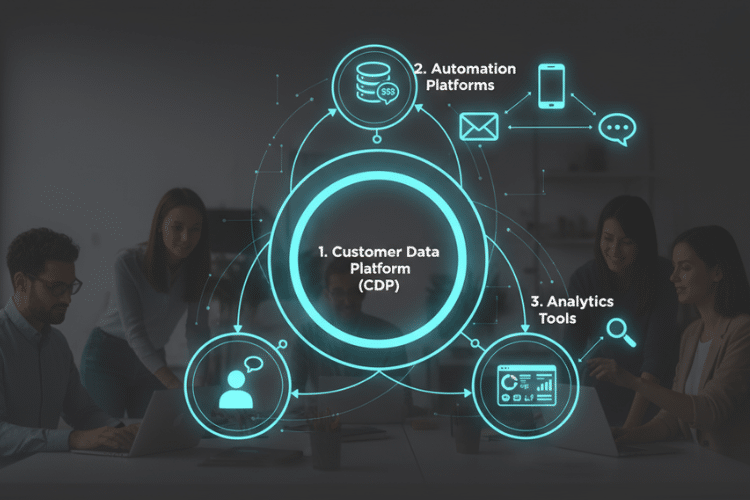
To execute an omnichannel strategy, you need a modern tech stack with three core tools. The foundation is the Customer Data Platform (CDP), which acts as the central brain, unifying all your customer data.
Acting as the nervous system, Marketing and Journey Automation Platforms use that data to trigger personalized messages and workflows across channels like email, SMS, and in-app notifications. Finally, Analytics and Measurement Tools provide the crucial feedback loop, allowing you to track behavior across the entire journey, measure what’s working, and find insights for continuous improvement.
In conclusion, omnichannel journey orchestration is no longer a futuristic ideal but a foundational requirement for any brand that wants to win in 2025. It’s a fundamental shift from a channel-focused mindset to a customer-obsessed one, powered by unified data and smart automation. The brands that master the art of creating a single, continuous conversation are the ones that will build unbreakable customer loyalty and drive sustainable, long-term growth.
You Might Also Be Interested In These Articles