Core Web Vitals Explained: A Guide to Page Speed and User Experience (UX) for Marketers
Core Web Vitals Explained: A Guide to Page Speed and User Experience (UX) for Marketers

In today’s digital landscape, your website’s performance is a direct reflection of your brand experience. A slow, clunky, or unstable site can damage user trust and hurt your bottom line just as much as a poorly executed marketing campaign. Google’s Core Web Vitals are a set of specific metrics designed to measure the real-world user experience of your pages, focusing on loading speed, interactivity, and visual stability. For marketers, understanding these vitals is no longer a technical option—it’s a strategic necessity for improving SEO rankings, boosting conversions, and delivering an exceptional customer journey.
Understanding LCP, INP, and CLS: What Do These Core Metrics Mean?
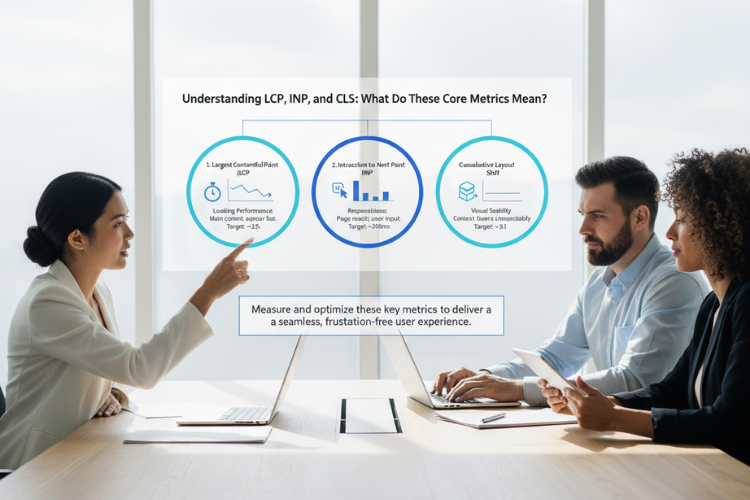
Core Web Vitals are built on three key metrics that quantify a user’s experience. Largest Contentful Paint (LCP) measures loading performance, marking how quickly the main content of a page appears; think of it as your site’s first impression, and aim for under 2.5 seconds. Interaction to Next Paint (INP) measures responsiveness, or how quickly your page reacts to a user’s click or tap; a good score is under 200 milliseconds. Finally, Cumulative Layout Shift (CLS) measures visual stability, tracking how much your content unexpectedly moves around as it loads. To avoid frustrating users, you should aim for a CLS score below 0.1.
Essential Tools for Measuring and Monitoring Your Core Web Vitals
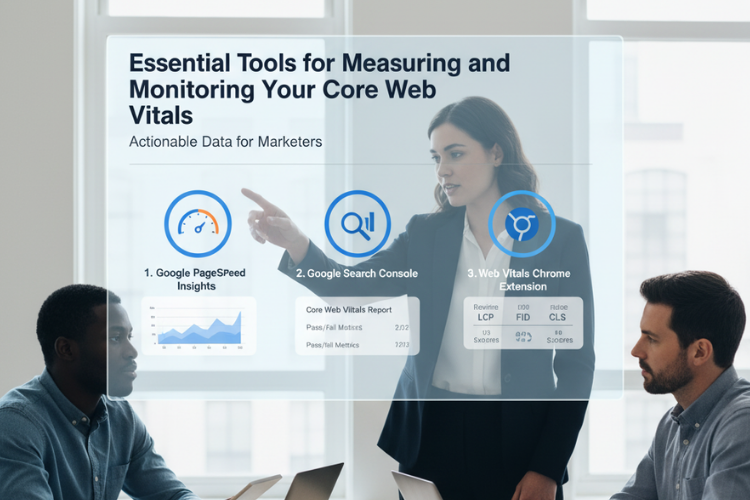
You don’t need to be a developer to track your site’s performance. Marketers can use several free Google tools to get clear, actionable data. Google PageSpeed Insights is perfect for a quick health check on any single URL, providing both real-world user data and lab-based diagnostics. For a broader view, the Core Web Vitals report in Google Search Console shows you how groups of pages are performing over time, helping you prioritize fixes. You can also use the Web Vitals Chrome Extension for real-time feedback on any page you visit, including your competitors’ sites.
Common Culprits: How Images, Scripts, and Fonts Slow Down Your Site

Poor Core Web Vitals scores are often caused by a few common issues. Large, unoptimized images are a primary culprit for slow LCP, as they take a long time to download and render. Render-blocking JavaScript and CSS files can halt page loading entirely, negatively impacting both LCP and INP. Third-party scripts from ads, analytics, and social media widgets are also notorious for slowing down sites and reducing responsiveness. Lastly, unexpected layout shifts (CLS) are frequently caused by web fonts loading late or by ads and banners appearing without a reserved space.
Practical Optimization Tips: How to Improve Your Core Web Vitals Score

Improving your Core Web Vitals is a team effort, but marketers can lead the conversation with a few key requests. To improve LCP, ask your development team to compress images, use modern formats like WebP, and implement a Content Delivery Network (CDN) to speed up server response times. For better INP, request an audit of all third-party scripts to remove or defer anything non-essential. To fix CLS, the most effective solution is to ensure all images, videos, and ad slots have explicit width and height attributes set in the code, which reserves space for them as the page loads.
The Long-Term SEO Impact of a Positive Page Experience

Optimizing for Core Web Vitals is more than just a technical fix; it’s a sustainable, long-term SEO strategy. Google has officially made page experience, measured by these vitals, a factor in its ranking algorithm. A fast, responsive, and stable website leads to lower bounce rates, longer session times, and higher conversion rates—all strong signals that tell search engines your site provides value. As search evolves with AI, providing a high-quality user experience will only become more critical, making your investment in performance a future-proof way to build authority and maintain visibility.
You Might Also Be Interested In These Articles